
United Nations Work
Princess Ashraf Pahlavi’s Role in International Diplomacy, Human Rights, and Social Development
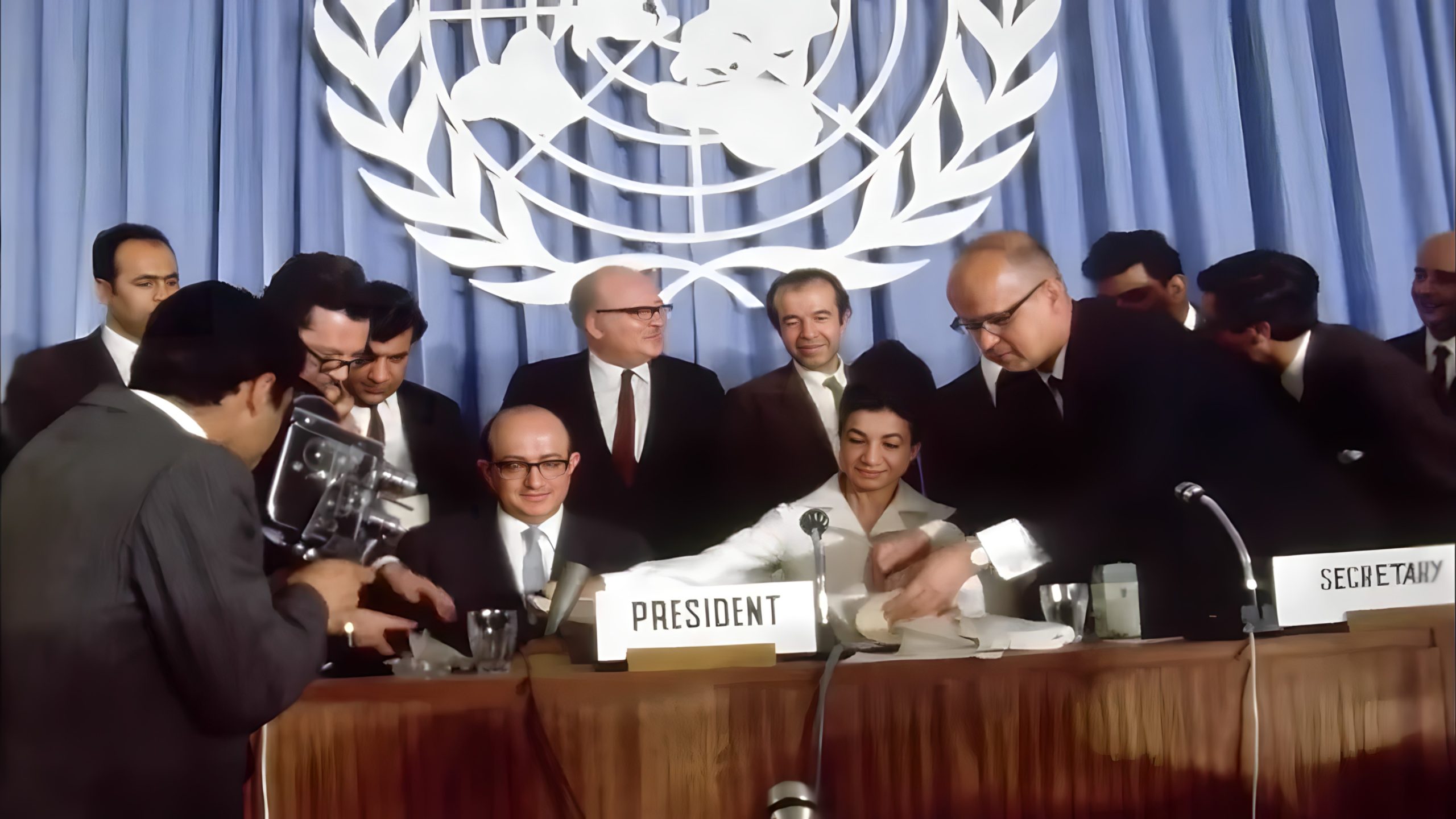
Princess Ashraf Pahlavi representing Iran on the international stage.
H.I.H. Princess Ashraf Pahlavi played an important role in representing Iran in international institutions, particularly through her work connected to the United Nations. Her efforts reflected a broad commitment to human rights, women’s advancement, literacy, social welfare, and international cooperation.
Iran’s Voice in International Forums
Through her diplomatic and humanitarian work, Princess Ashraf Pahlavi helped bring issues of social progress, women’s rights, literacy, and human dignity into international discussion.
Representation at the United Nations
Princess Ashraf Pahlavi represented Iran in international gatherings and contributed to the country’s presence within the United Nations system. Her public service placed her at the intersection of diplomacy, social development, human rights, and the advancement of women.
Her work reflected the belief that Iran’s modernization was not only a national project, but also part of a wider international conversation about development, education, justice, and human dignity.
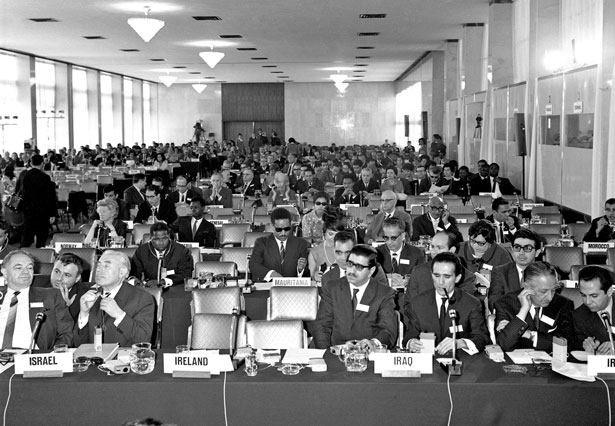
International diplomacy and delegation work.
Human Rights and Social Development
A central part of Princess Ashraf’s international activity was connected to human rights and social development. She supported the view that human rights should include not only political rights, but also education, welfare, literacy, health, and social opportunity.
This broader understanding of human rights reflected the priorities of developing nations seeking progress, modernization, and dignity for their citizens.
The 1968 Tehran Conference on Human Rights
In 1968, Princess Ashraf Pahlavi chaired the First World Conference on Human Rights in Tehran. The conference became an important international gathering and helped broaden the global discussion of human rights beyond political freedoms alone.
The Tehran conference emphasized the relationship between human rights, social progress, economic development, education, and the dignity of individuals and communities.
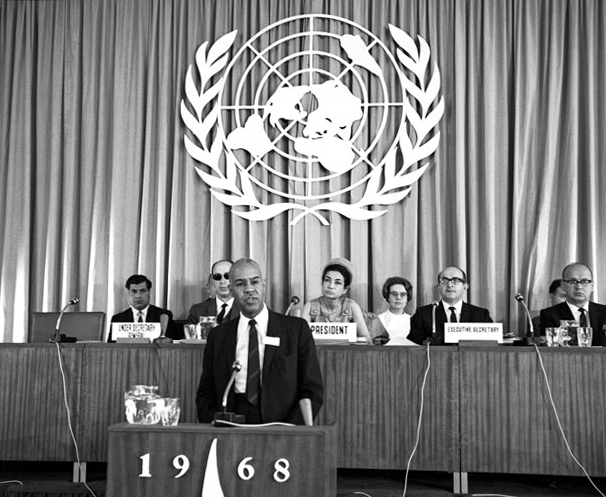
The 1968 Tehran Conference on Human Rights.
Women, Literacy, and International Progress
Princess Ashraf Pahlavi’s international work also connected closely to women’s advancement and literacy. She supported efforts that expanded educational opportunity and encouraged women’s participation in public and civic life.
Her advocacy linked women’s progress with national development, emphasizing that literacy, education, and social participation were essential to building a stronger and more modern society.
Human Rights
Support for a broader understanding of dignity, rights, welfare, and social opportunity.
Women’s Advancement
International advocacy for women’s education, participation, and public visibility.
Literacy
Support for literacy and education as foundations of development and national progress.
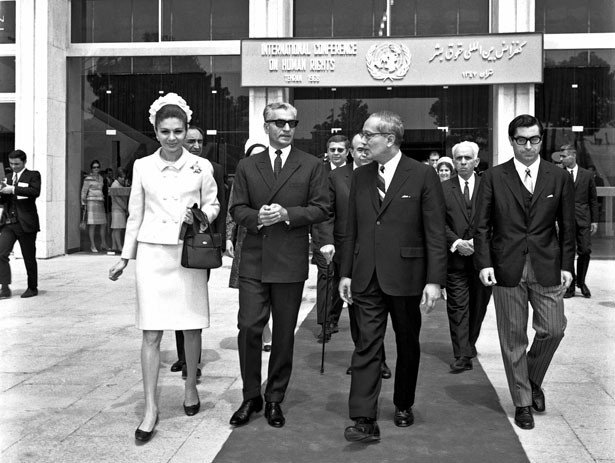
A legacy of international service and public diplomacy.
Her work at international forums reflected a vision of Iran as a modern nation engaged with the world through culture, development, and human dignity.
Legacy
Princess Ashraf Pahlavi’s United Nations work remains an important part of her public legacy. Through her participation in international conferences and institutions, she helped connect Iran’s national development goals with global conversations about human rights, women’s advancement, literacy, and social progress.
United Nations Work
A legacy of diplomacy, human rights, and international public service.