
Speech at Association of United States Army

Iran’s Past, Impossible Present and Possible Future
Delivered at the Annual Dinner of the Association of the United States Army, Northern New Jersey Chapter, this address reflected Princess Ashraf Pahlavi’s view of Iran’s modern achievements, revolutionary collapse, and uncertain future.
The situation in the Middle East has never been as dangerous and explosive as it is today. From the Persian Gulf to the Mediterranean, the region is experiencing intense convulsions, especially in my beloved country, Iran.
In this volatile context, the Soviet Union is profiting and taking full advantage. It has occupied Afghanistan, strengthened its influence in Syria, and introduced into Iran its agents and communist supporters who wait for the right moment to take over the country.
Only two years earlier, peace and stability still reigned in the region, and oil flowed abundantly at reasonable prices. This was largely due to the prosperous and strong Iran that my brother had built through years of sustained effort.
The regime, in addition to being an ally of the West, was a source of stability for Iran itself and for neighboring countries.
The Achievements of Modern Iran
Today, there is a tendency to ignore the achievements of the monarchy and remain silent about the great results of the White Revolution. Yet those achievements were real and visible.
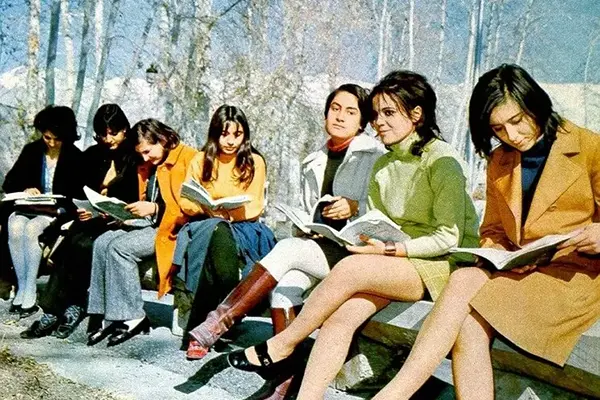
Iran’s growth rate rose significantly. Per capita income increased dramatically. Millions of children attended schools. Universities expanded, literacy programs reached remote parts of the country, and public health campaigns helped eliminate diseases such as typhus, malaria, smallpox, and trachoma.
A growing middle class emerged. Industrial projects were completed or under development. Religious freedom created a climate of tolerance in which ethnic and religious minorities enjoyed rights and participation.
A modern and disciplined army helped protect the security of the region, while Iran’s foreign policy allowed constructive cooperation with neighboring countries and the wider world.
Iran After the Revolution
By 1981, Iran had become a country on the edge of destruction and disintegration. In less than two years, and even before the Iraqi invasion, the new regime had damaged the economic, administrative, and social machinery built over previous decades.
Industrial managers, civil servants, professionals, professors, doctors, engineers, army officers, and many others fled persecution. Oil production collapsed, development programs were abandoned, unemployment spread, and schools and universities were closed.
The country’s monetary reserves and oil revenues were squandered. Corruption spread through the new ruling circles. The institutions that had built modern Iran were dismantled or driven into exile.
The Human Cost
The new regime imposed arbitrary imprisonment, executions, repression, torture, and laws drawn from the darkest periods of history. Educated and experienced Iranians were forced to flee their homeland.
Millions of Iranians found themselves displaced, unemployed, imprisoned, or in exile. Women, who had become active participants in modern Iran, were pushed backward by policies rooted in medieval thinking.
Why Did the Revolution Happen?
The contrast between Iran before 1978 and Iran after the rise of Khomeini raises a central question: if the White Revolution had achieved so much, how could such a destructive revolution take place?
Some claimed that Iranians revolted against the lack of democratic liberties. Yet this argument cannot explain why those supposedly seeking freedom submitted to one of the most violent and repressive regimes of the modern era.
The events in Iran cannot be understood without recognizing foreign interests, organized destabilization, ideological campaigns, and the destructive power of hatred.
A Warning to the West
The same forces that helped destabilize Iran may now threaten other moderate regimes allied with the United States and the West. If those regimes fall, their replacement may not be democracy, but extremism or communism.
The Soviet Union need not always act directly. It can benefit from chaos, revolutionary movements, terrorism, anti-American agitation, and the weakening of allied governments.
Hatred of the United States had become a common denominator among many revolutionary forces, cultivated in the Islamic world, Latin America, Asia, and even among students in industrialized nations.
The Future of Iran
The Khomeini regime was described as losing its grip, challenged by internal power struggles, separatist movements, and the growing exhaustion of the Iranian people.
For Princess Ashraf Pahlavi, Iran’s future rested on a stark choice: constitutional monarchy, theocracy, or communism.
She argued that for centuries monarchy had served as the backbone of Iran, bringing unity and continuity to the nation through periods of crisis and renewal.
The future of Iran, in her view, remained tied to national unity, historical continuity, and the restoration of a secular and stable order.
Iran’s Past, Impossible Present and Possible Future
Speech by H.I.H. Princess Ashraf Pahlavi • March 20, 1981